How Much Does It Cost to Study in the UK?
The UK is worth considering if you’re planning to study abroad, particularly if you’re looking for a master’s degree you can complete in one year. But before choosing a course, it helps to understand the tuition fees, available scholarships and other costs you’ll need to budget for.
Here’s a breakdown of what international students can expect to pay and where you may be able to save.
1. UK tuition fees for international students
Tuition fees depend on your course, study level and institution. As a general guide, international students can expect to pay:
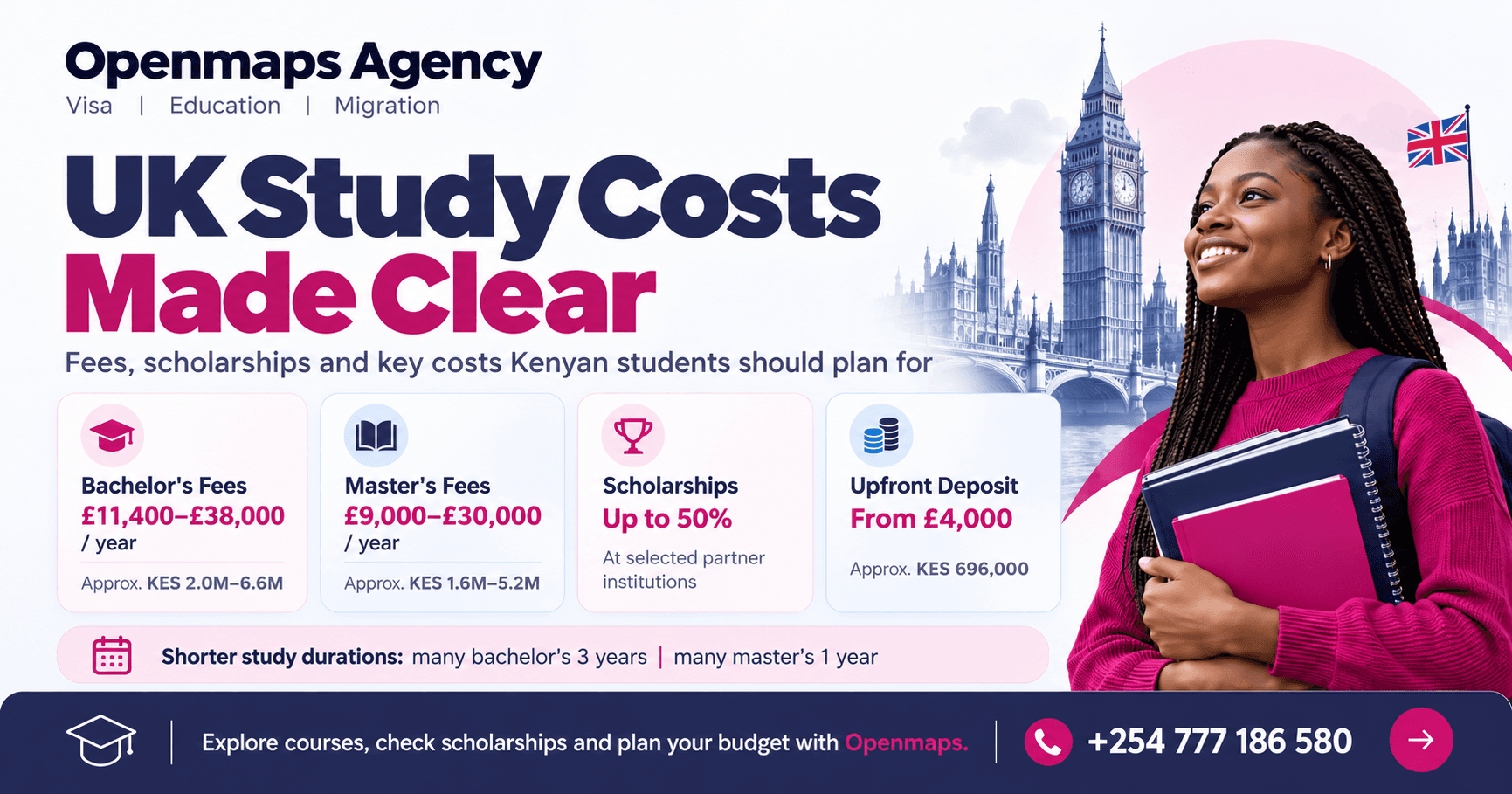
- Undergraduate degrees: £11,400–£38,000 per year (approximately KES 2.0 million–6.6 million).
- Postgraduate degrees: £9,000–£30,000 per year (approximately KES 1.6 million–5.2 million).
Courses in areas such as humanities and social sciences tend to be less expensive than laboratory-based and clinical programmes, although fees vary between institutions.
These figures are indicative ranges, so check the fees for your preferred course before applying.
2. How long does it take to complete a degree in the UK?
Course duration is another factor to consider when comparing study destinations. The shorter the programme, the less time you may need to spend covering accommodation and other living expenses.
Bachelor’s degrees: Most undergraduate degrees in England, Wales and Northern Ireland take three years. In comparison, bachelor’s degrees in the USA and Canada typically take four years. Undergraduate degrees in Scotland commonly take four years.
Master’s degrees: Many UK taught master’s programmes take one year of full-time study. In the USA, a master’s degree typically takes around two years, while programmes in Canada and Australia commonly take one to two years, depending on the course.
A shorter programme can help reduce overall study costs, but your actual savings will depend on tuition fees, living expenses and your chosen institution.
3. Can you get a scholarship to study in the UK?
Scholarships can help make studying abroad more affordable, and you don’t always need to secure a full scholarship to benefit.
Selected Openmaps partner institutions offer partial scholarships of up to 50% off tuition fees. The discount available depends on the institution, course and eligibility requirements.
For example, a 50% tuition discount on an annual fee of £20,000 would reduce that fee to £10,000 before any other applicable charges. This is an illustration of how the discount works, not a guarantee of an award.
Keep in mind that tuition scholarships do not automatically cover accommodation, living expenses, flights or visa costs. You’ll need to plan for these separately.
If you’re considering the UK, contact Openmaps to find out which partner institutions have scholarship opportunities for your preferred course.
4. What upfront payment should you budget for?
Tuition fees are not the only cost to consider when applying to a UK institution. You may also need to make an initial tuition payment to secure your place or meet the conditions for your next steps.
Many UK institutions require an upfront tuition deposit, with some asking for amounts starting at £4,000 (approximately KES 696,000). Others may require a larger payment, potentially reaching 50% of the annual tuition fee.
The exact amount and payment deadline depend on the institution and your offer. Confirm these details before making financial arrangements.
You should also account for accommodation, living expenses, visa-related costs, travel and other applicable fees when calculating your overall budget.
5. How to plan your UK study budget
Before committing to a course, compare more than the advertised tuition fee. Consider the following:
- Total tuition fees: What will you pay for the entire programme?
- Scholarship options: Are you eligible for a tuition discount, and how much will you pay after the award?
- Upfront payment: How much must you pay before enrolment or visa-related steps?
- Living expenses: What will accommodation, food, transport and other essentials cost?
- Course duration: Could a shorter programme help reduce your overall expenses?
- Career plans: Does the course align with your qualifications and long-term goals?
Having these details in place can help you make a more informed decision and avoid unexpected expenses during the application process.
Explore your UK study options with Openmaps
The cost of studying in the UK will depend on your chosen course, institution and available funding. Comparing these factors early can help you identify options that fit your budget.
Contact Openmaps to explore UK courses, check available partial scholarships and find out what you’ll need to budget before applying.
Tuition fees, deposits, course durations and scholarship eligibility vary by institution and programme. KES amounts are approximate and subject to exchange-rate changes.