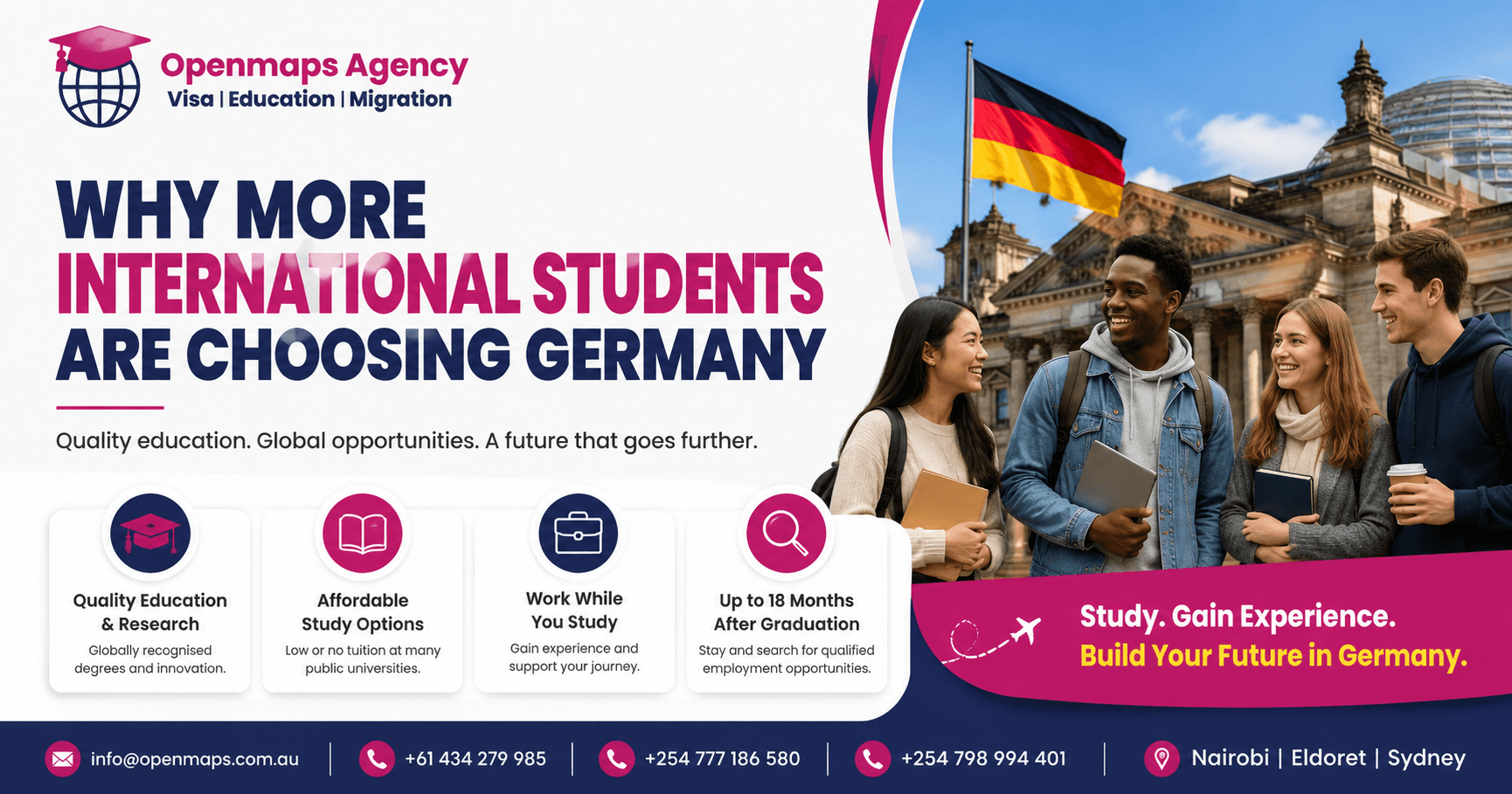
Germany is becoming one of the study destinations international students are watching closely — and for good reason.
According to the German Academic Exchange Service (DAAD), around 420,000 international students and doctoral candidates were enrolled at German universities in the 2025/26 winter semester. International first-year enrolments were also projected to rise by about 9% compared with the previous year.
So, what is making Germany increasingly attractive?
Quality Education with More Affordable Options
Germany is known globally for strong education and research, particularly in areas such as engineering, IT, technology, business and the sciences.
Another major attraction is cost. Many public universities charge little or no tuition for certain programmes, although students still need to budget for semester contributions and living expenses. Private universities generally charge tuition fees.
For students comparing several international destinations, this can make Germany an attractive option.
More English-Taught Programmes
Not every student heading to Germany needs to complete their degree in German.
Universities continue to expand their English-taught programmes, particularly at postgraduate level. In fact, almost half of the universities surveyed by DAAD expected to further increase their English-language offerings.
Learning German is still highly recommended, especially for everyday life and future employment, but the availability of English-taught courses has made Germany accessible to a much wider international audience.
Work While You Study
Germany also allows eligible international students to work alongside their studies.
Students from non-EU countries can generally work up to 140 full days or 280 half-days per year. An alternative arrangement allows work of up to 20 hours per week during the lecture period, subject to the applicable rules.
This gives students an opportunity to gain experience, build professional networks and earn additional income while completing their studies.
Up to 18 Months After Graduation
For many students, what happens after graduation is just as important as the course itself.
International graduates who successfully complete a degree in Germany can apply for a residence permit allowing them to remain in the country for up to 18 months to search for qualified employment.
During this period, graduates can work while searching for a suitable skilled role. Once they secure qualifying employment, they may be able to transition to a skilled-worker residence permit or an EU Blue Card, depending on eligibility.
Access to a Strong European Economy
Germany is home to major global companies and industries across engineering, automotive, manufacturing, technology, renewable energy, healthcare and research.
For international students, studying there can therefore provide more than an academic qualification. It can also offer exposure to European industry, professional networks and potential career opportunities.
Of course, employment is never guaranteed. A student's qualifications, experience, German-language ability and the labour market will all influence their opportunities after graduation.
Is Germany Worth Considering?
For students looking for a destination that combines quality education, comparatively affordable study options, English-taught programmes, work opportunities and a clear post-study pathway, Germany is certainly worth considering.
The continued rise in international enrolments shows that more students are reaching the same conclusion.
Germany is no longer simply an alternative to the traditional study destinations — it is becoming a strong study destination in its own right.